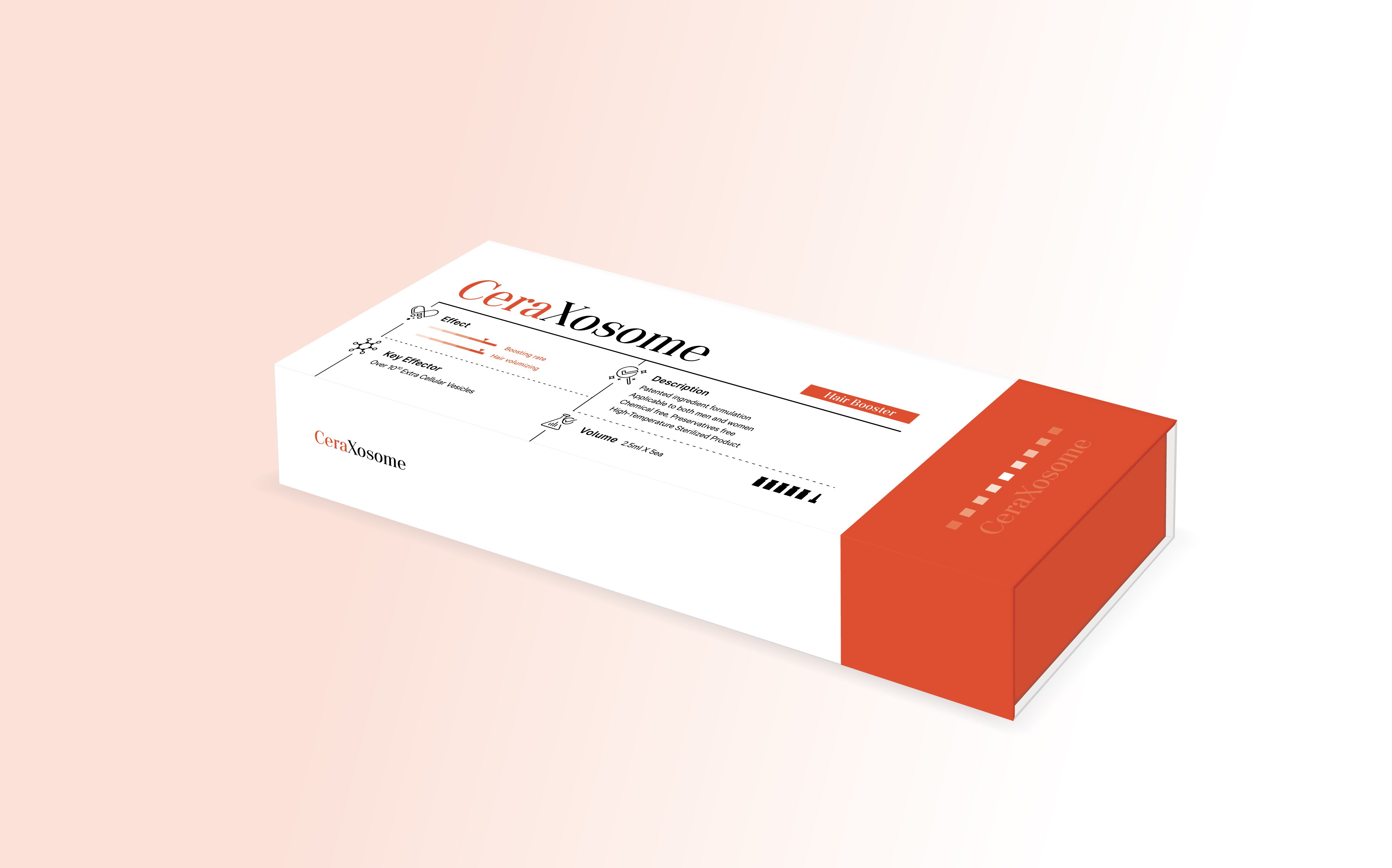
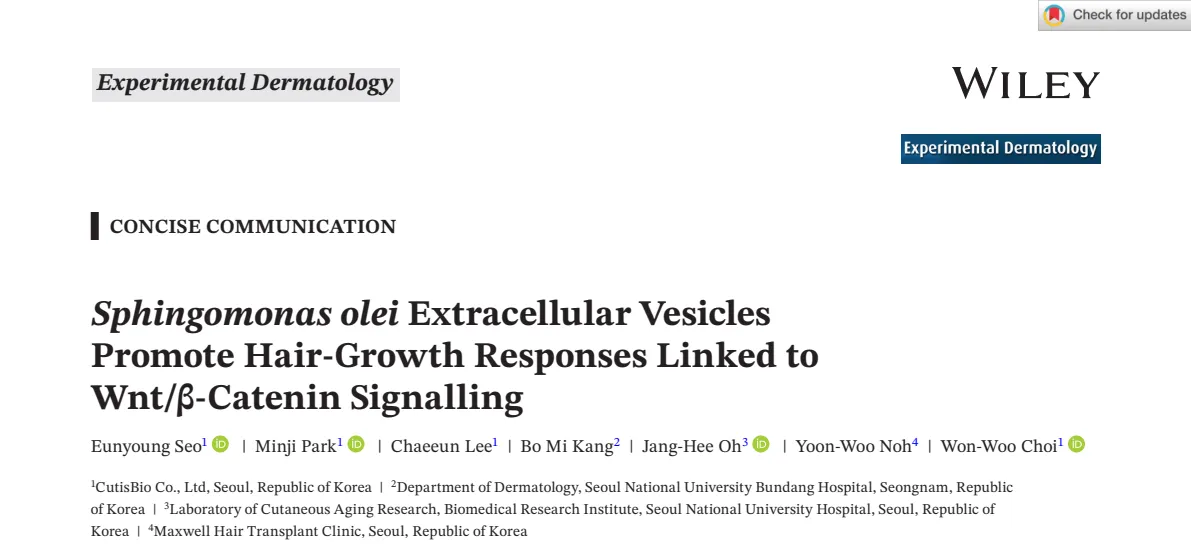
CeraXosome is based on Sphingomonas ferment extract developed through the SAC platform. A paper in Experimental Dermatology, co-authored by CutisBio researchers, provides context for research into related microbial materials.
The study evaluated an extracellular-vesicle-enriched preparation called SoEVs in human dermal papilla cells and cultured human hair follicles.
Sphingomonas olei EV research: what was observed?
Research preparation. Culture supernatant from Sphingomonas olei, isolated from healthy human skin, was filtered to obtain an extracellular-vesicle-enriched preparation. The paper calls this SoEVs. Electron microscopy and nanoparticle tracking analysis characterised its vesicles and particles.
Human dermal papilla cells. SoEV treatment was associated with increased IGF1 and VEGFA mRNA. Increases were also observed in phosphorylated AKT (p-AKT), phosphorylated GSK-3β (p-GSK-3β), total β-catenin, and the Wnt-related transcriptional readouts LEF1 and AXIN2.
Cultured human hair follicles. Compared with untreated controls, SoEV treatment was associated with greater shaft elongation, reduced culture-induced shaft thinning and more Ki-67-positive cells around the dermal papilla. These were observations in an ex vivo culture model.
Study scope. The follicle experiments used tissue from a single donor. Residual non-vesicular soluble factors may have contributed, and the responsible bioactive components remain unidentified. The Wnt/β-catenin findings show association, rather than proof that this pathway caused the responses. In vivo validation and clinical evaluation of the finished product were outside the study.
Read the published Experimental Dermatology paper · DOI: 10.1111/exd.70284